


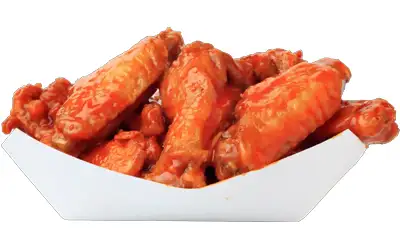
Wet sauce wings are tossed in a liquid sauce after cooking, so the flavor hits fast and coats every bite. Dry rub wings are coated in a blend of dried spices, so the skin stays crisper and the seasoning builds as you eat. Choosing between them comes down to one question: do you want the sauce or the crunch to lead?
Both styles start the same way, with a crispy, fully cooked wing. What changes is how the flavor gets onto it, and that one step affects texture, heat, mess, and how well your order holds up on the drive home. Here’s how wet sauce vs. dry rub wings really compare.
What Is the Difference Between Wet Sauce and Dry Rub Wings?
The difference is the carrier. Wet wings use a liquid (butter, oil, vinegar, or a sugar-based glaze) to carry flavor onto the wing. Dry rubs skip the liquid and rely on the wing’s own surface fat to hold ground spices in place.
| Factor | Wet Sauce Wings | Dry Rub Wings |
|---|---|---|
| How flavor is applied | Tossed in liquid sauce after cooking | Coated in dried spices before or right after cooking |
| Texture | Crispy skin under a glossy coating | Maximum surface crunch |
| How flavor hits | All at once, from the first bite | Builds gradually as you chew |
| Mess level | High: plan on napkins | Low: easy to eat on the go |
| Best eaten | Soon after saucing | Holds its crunch longer |
| Classic examples | Buffalo, BBQ, sweet chili glazes | Lemon pepper, Cajun, garlic-herb blends |
How Wet Sauce Wings Work
Wet wings are sauced after they come out of the fryer. The hot, rough surface of the skin gives the sauce plenty of nooks to grip, so a well-made sauce coats the wing evenly instead of sliding off.
The sauce itself decides how good the result is. Body matters, because a sauce that’s too thin pools at the bottom of the container while one that’s too thick turns gummy. Balance matters too: enough acid to cut through the richness of fried skin, enough fat or sugar to round out the heat. We break down those building blocks in our guide to what makes a great wing sauce.
Do Sauced Wings Get Soggy?
Only if they sit. Moisture from the sauce slowly softens the crust, so a sauced wing is at its best in the first few minutes after it’s tossed. That’s why wet wings should be sauced to order, not ahead of time, and why they’re worth eating first when your order arrives.
How Dry Rub Wings Work
A dry rub is a blend of ground spices, herbs, salt, and sometimes sugar. It can go on at two different points, and each one gives a different result:
- Before cooking: The rub cooks into the skin and forms a seasoned crust. Any sugar in the blend browns under high heat, adding a slightly sweet, toasty edge.
- Right after cooking: The rub is tossed onto the hot wing, where the surface fat holds it in place. The spices stay brighter and more aromatic because they never go through the cooking process.
With no liquid on the surface, nothing softens the skin. That’s the biggest advantage of a dry rub: the crunch lasts. The trade-off is that the flavor is more concentrated in some spots than others, so each bite tastes a little different as you work through the wing.
How Heat Hits Differently in Sauce vs. Rub
Heat behaves differently in each style, and the reason is chemistry. Capsaicin, the compound that makes chiles hot, is fat-soluble and dissolves poorly in water.
- In a wet sauce, the heat is already dissolved in butter or oil and spread across the entire wing. It reaches your whole palate at once, which is why a hot sauce feels immediate.
- In a dry rub, the heat comes from ground chile that’s concentrated in the seasoning. It tends to build bite by bite instead of landing all at once.
That same chemistry is why a sip of water does so little against a hot wing. If you’re still working out how much heat you can handle, our heat levels guide walks through every level from mild to the hottest end of the scale.
Wet Sauce or Dry Rub: Which Should You Order?
Most people already lean one way. If you reach for extra napkins before the food arrives, you’re probably a sauce person. If you want to eat in the car without wrecking your shirt, you’re probably team dry rub. Here’s a quick way to decide:
- Go wet if you want bold, immediate flavor and you’re eating at a table, right away.
- Go dry if crunch is your top priority or you’re eating on the go, at a tailgate, or in the car.
- Go wet for sweet, tangy, or buttery flavors, since those depend on a liquid base to taste right.
- Go dry for savory, peppery, or herb-forward flavors where you want the spice to stand out.
- Order both when you’re feeding a group. Two contrasting flavors side by side make the difference obvious fast.
Where Our Flavors Fit
Every wing order at The Buffalo Spot starts with fresh, never-frozen chicken, made to order and finished in your choice of 12 signature sauces. You can put them on traditional wings, boneless wings, or jumbo tenders, all on our chicken menu. Here’s how the lineup sorts by flavor:
- Savory, no burn: Lemon Pepper and Garlic Parmesan. If you like the peppery, herb-forward profile of a classic dry rub, start here.
- Classic buffalo heat: Mild, Original Hot, Very Hot, and Atomic Hot, the traditional wet-sauce lineup from easygoing to intense.
- Sweet and smoky: Original BBQ for a crowd-pleasing, low-heat glaze.
- Sweet heat: Mango Habanero, Pineapple Jalapeño, and Jamaican Jerk for a mix of sweet and spicy.
Because sauced wings are best fresh, they’re worth eating first. If you’re ordering for a crowd, mixing a savory flavor with a classic buffalo sauce is the easiest way to keep both camps happy.
Common Questions About Wet and Dry Wings
Is dry rub or sauce better for wings?
Neither is better. It depends on what you want from the wing. Dry rubs keep the skin as crisp as possible and deliver a concentrated spice flavor that builds as you eat. Wet sauces coat the whole wing and hit with full flavor from the first bite, at the cost of more mess. Many wing fans order one of each to compare.
What is the difference between a dry rub and a wet rub?
A dry rub is made only of dried spices, herbs, salt, and sometimes sugar. A wet rub adds a liquid such as oil, vinegar, or mustard to turn those dry ingredients into a paste that clings to the meat. A wet rub is still different from a wing sauce, since sauce is tossed on after cooking while a rub goes on before.
Do dry rub wings stay crispy longer than sauced wings?
Yes, as a rule. Liquid sauce slowly softens the crust, so sauced wings taste best within a few minutes of being tossed. A dry rub adds no moisture to the surface, so the skin holds its crunch longer. That makes dry-style flavors a smart pick for tailgates, road trips, or any time you won’t eat right away.
Which wing flavors have no heat?
At The Buffalo Spot, Lemon Pepper and Garlic Parmesan bring big, savory flavor without any burn, and Original BBQ and Mild are easygoing options for anyone who wants flavor first. If you want to step up gradually, our heat levels guide shows where every sauce lands from mildest to hottest.
Settle the Debate With Your Next Order
The fastest way to pick a side is to taste them back to back. Grab a savory flavor and a classic buffalo sauce, eat them fresh, and you’ll know where you stand in a few bites. Whether you’re stopping by The Buffalo Spot in Tempe or any of our California and Arizona locations, you can order online for pickup or delivery and have your wings made fresh for you.